
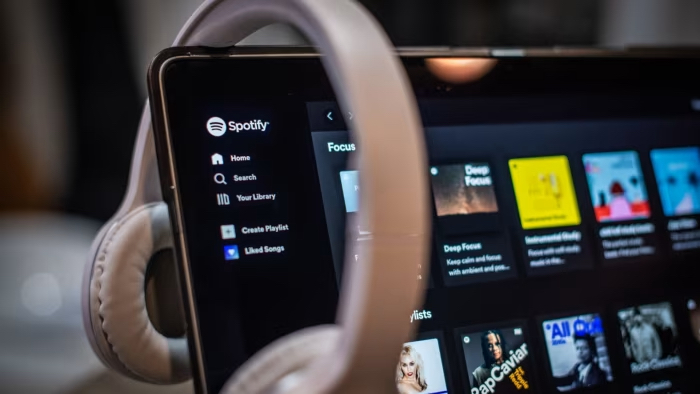
The intersection of artificial intelligence and music has been a hot topic for years, but a recent controversy involving Spotify has escalated industry concerns to a new level. According to a report by 404 Media, AI-generated songs were uploaded and featured on the official Spotify pages of deceased artists, including country music legends Blaze Foley and Guy Clark, a move many are calling deceptive and disrespectful.
Spotify Publishes AI-Generated Songs From Dead Artists Without Permission
🔗 www.404media.co/spotify-publ…— 404 Media (@404media.co) 22 juillet 2025 à 16:59
AI Songs Masquerading as the Real Deal
Blaze Foley, a revered country singer-songwriter who was murdered in 1989, allegedly had a new track titled ‘Together’ uploaded to his official Spotify page. The song, reported by 404 Media, mimicked Foley’s classic style, featuring “a male country singer, piano, and an electric guitar,” but was clearly fabricated by AI. The accompanying cover image was also AI-generated and bore little resemblance to Foley himself.
“It’s kind of an AI schlock bot, if you will,” said Craig McDonald, the owner of Lost Art Records, which holds Foley’s music rights. “It has nothing to do with the Blaze you know — that whole posting has the authenticity of an algorithm,” he told 404 Media.
Spotify has since removed the track, citing violations of its content policies. In a statement to Mashable, a Spotify spokesperson explained that the platform prohibits “impersonation intended to mislead, such as replicating another creator’s name, image, or description, or posing as a person, brand, or organization in a deceptive manner.”
But Foley wasn’t the only artist affected. Grammy-winning songwriter Guy Clark, who passed away in 2016, also had an AI-generated song uploaded under his name. Similar to Foley’s case, the track featured a fake AI-generated image that bore no resemblance to the late artist.
Spotify’s Response and Growing User Frustration
Spotify has pledged to take “action against licensors and distributors who fail to police for this kind of fraud,” warning that repeat offenders may be permanently banned from the platform.
While some, like music writer Ted Gioia, applauded Spotify’s quick takedown of the unauthorized songs, many users remain skeptical. “They need to add an AI filter asap or I’m done with them,” wrote one Reddit user in response to the controversy. Another user claimed that three of the songs in their “Discover Weekly” playlist were AI-generated.
Despite the backlash, Spotify currently has no system in place to tag or label AI-generated music, nor has it shared publicly how it identifies such content. When Mashable reached out for clarification, Spotify did not respond.
Legal and Ethical Gray Areas
As this incident unfolds, broader concerns about regulation and transparency in the music industry are gaining momentum. While streaming platforms like Spotify are not legally obligated to identify AI-generated music, many stakeholders are calling for change.
“We’re calling on the UK government to protect copyright and introduce new transparency obligations for AI companies,” said Sophie Jones, Chief Strategy Officer at the British Phonographic Industry (BPI), in a statement to The Guardian. “Clear labelling of content solely generated by AI” is also a top priority, she emphasized.
This aligns with a growing demand from both fans and professionals for stricter governance and ethical standards in how AI is integrated into the creative process, especially when it risks impersonating real human artists, living or deceased.
Final Thoughts
The unauthorized use of AI-generated music on the official Spotify pages of late musicians like Blaze Foley and Guy Clark highlights a troubling loophole in how digital platforms handle synthetic content. While Spotify has taken some corrective steps, this incident underscores the urgent need for transparency, labeling, and potentially government regulation in the age of AI music.
As the industry grapples with these questions, one thing is clear: listeners and rights holders alike deserve to know whether the music they hear is human-made, machine-generated, or deceptively pretending to be something it’s not.
Sources: