

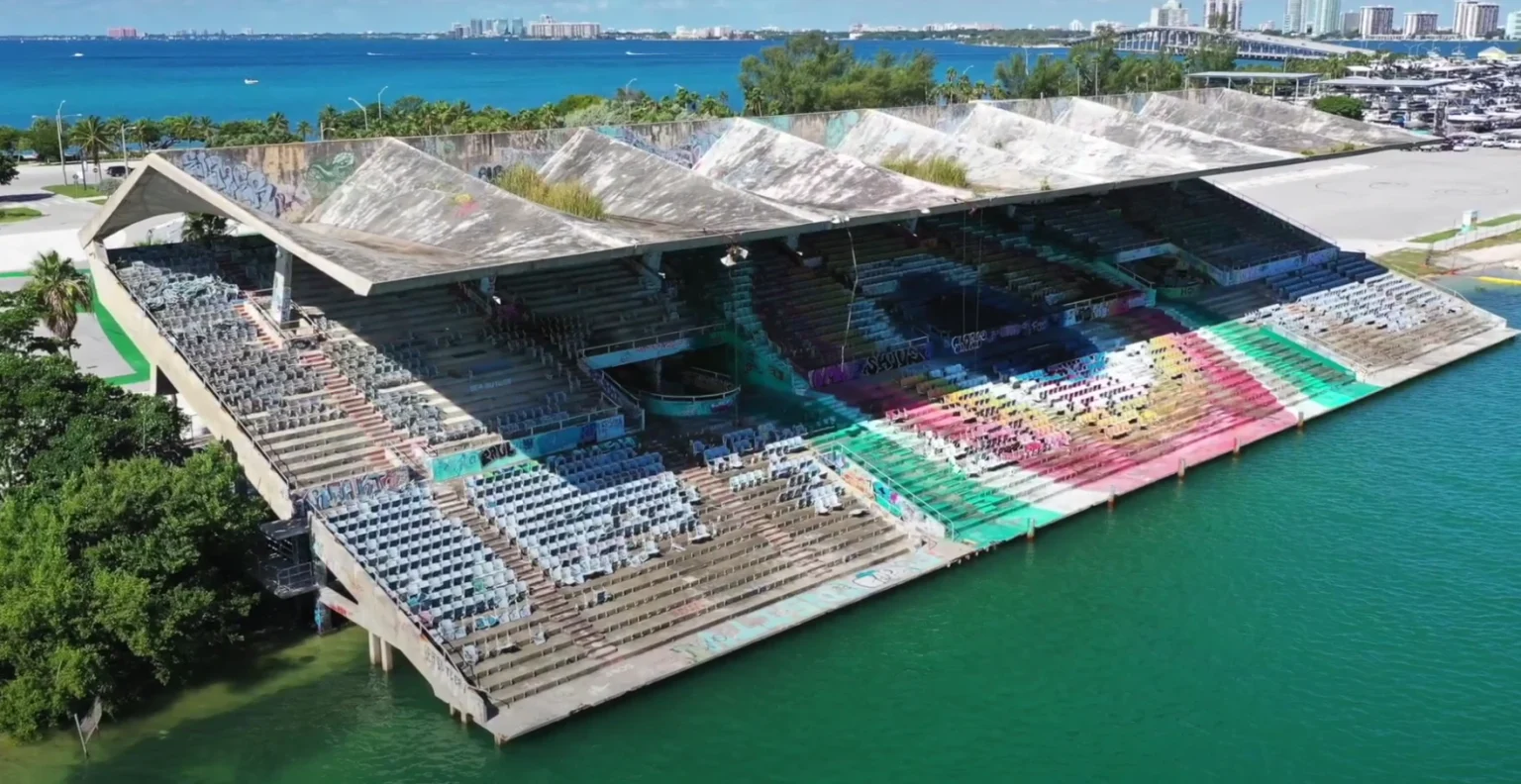
For decades, the Miami Marine Stadium on Virginia Key stood as an architectural marvel and a crown jewel of South Florida culture. From high-speed powerboat races ripping across Biscayne Bay to legendary floating-stage performances by Jimmy Buffett, Queen, and Ray Charles, the 6,560-seat concrete venue was once the ultimate epicenter of Miami entertainment.
Now, city leaders are reaching a critical turning point. This decision will officially decide whether the historic structure will finally undergo a multi-million dollar restoration and be transformed into a prized venue like Red Rocks or be left to rot.
A Masterpiece Lost to Time
Designed in 1963 by 27-year-old Cuban immigrant architect Hilario Candela, the stadium was celebrated worldwide for its dramatic, cantilevered folded-plate concrete roof—at the time, the longest span of cantilevered concrete in the world. However, its doors were abruptly shuttered in 1992 following the destruction of Hurricane Andrew. While structural engineers later confirmed the building remained sound, the venue fell into deep neglect. Over the last three decades, it transformed into an iconic, graffiti-covered haven for street artists, urban explorers, and music video shoots. Meanwhile, local government, preservationists, and developers repeatedly clashed over revitalization plans.
The Proposed Deal Being Voted On
Miami voters will decide whether to approve a long-term management and restoration deal for the historic Miami Marine Stadium, a plan that would give Global Spectrum—an Oak View Group subsidiary—a contract of up to 40 years to operate the venue. Under the proposal, the company would contribute $10 million toward restoring the stadium and help transform its parking lot into a public flex park and recreational facility that could also host events. The agreement includes an initial 10-year term with three renewal options, during which the city would receive 93 percent of event sales after a monthly management fee, as well as 85 percent of sponsorship revenue from sponsorships.
Restoration vs. Real Estate
The City of Miami is weighing updated proposals regarding the site’s future. Preservation groups, backed by the National Trust for Historic Preservation and local arts foundations, have long pushed for a full restoration. They hope to revive the stadium as a world-class outdoor venue for live music, esports, and water sports. However, skyrocketing construction costs, political hurdles, and debate over commercial surrounding development have complicated the timeline for years. City commissioners are now evaluating whether a public-private partnership model can finally make the venue financially viable without sacrificing its historic status.