

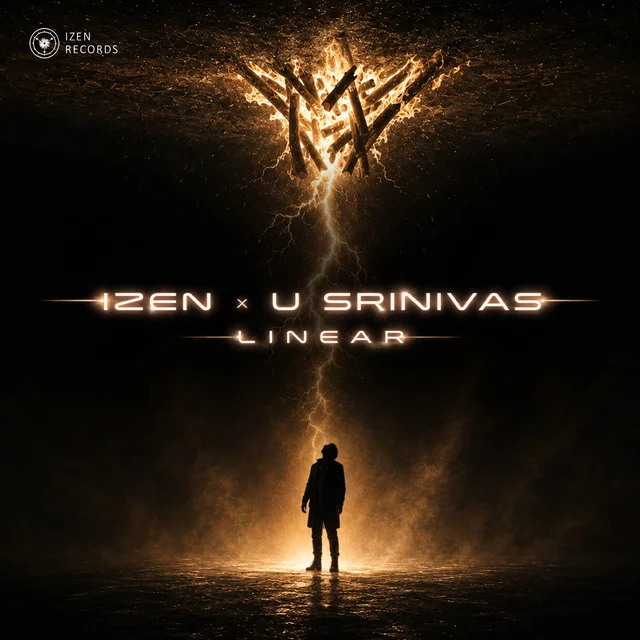
Indian electronic artist I-ZEN has released a new single called ‘LINEAR’, built around recordings from the late mandolin player U. Srinivas. The track pairs India’s classical instrumental tradition with a decidedly club-oriented electronic production, and it marks the first taste of a larger body of work I-ZEN has been developing for years.
Srinivas, widely regarded as one of India’s most accomplished instrumentalists, was known for adapting the mandolin, an instrument with no real precedent in Indian classical music, into a vehicle for Carnatic performance. He passed away in 2014 at age 45, but the seeds of ‘LINEAR’ were planted before that, when Srinivas entered the studio, recorded a set of musical phrases and ideas, and handed the material over to I-ZEN to shape into something new.
That handoff turned into a long-term project rather than a quick turnaround. I-ZEN spent years producing, experimenting, and refining those original recordings before arriving at the final version of ‘LINEAR,’ treating the process less like a remix job and more like building a full electronic composition around the work of a musician he clearly holds in high regard.
Handling someone else’s legacy, especially posthumously, comes with obvious pressure, and I-ZEN addressed it directly in how the single’s visual component was made. Rather than using AI to recreate Srinivas’s likeness for the music video or any accompanying visuals, I-ZEN opted to keep the focus on the recordings themselves, leaving Srinivas’s actual contribution as the center of the story instead of a digital stand-in.
‘LINEAR’ functions as an introduction to I-ZEN’s broader sonic world, with more material from the same project reportedly on the way. His influences span a wide range, trance, techno, and darker psytrance sit alongside touchpoints like The Prodigy, The Chemical Brothers, Moby, and Metallica, as well as Goa trance staples like Infected Mushroom, Paul van Dyk, and Armin van Buuren. Some tracks from the upcoming project lean further into Indian instrumentation, while others push toward more conventional electronic territory.
Building Toward a Larger Project
That stylistic range appears to be a deliberate part of I-ZEN’s approach. He’s framed electronic music as a way to introduce younger and international listeners to Indian musical traditions that exist well outside the Bollywood framework most Western audiences associate with Indian music. Long term, he’s said he wants to work with musicians from different regions across the country, folding those varied regional traditions into a broader electronic context rather than treating Indian electronic music as one fixed sound.
With ‘LINEAR’ out now, I-ZEN is positioning it as the opening chapter of a fuller project, one built less around a single genre definition and more around the idea that tradition, technology, and identity can occupy the same space on a dance floor.