

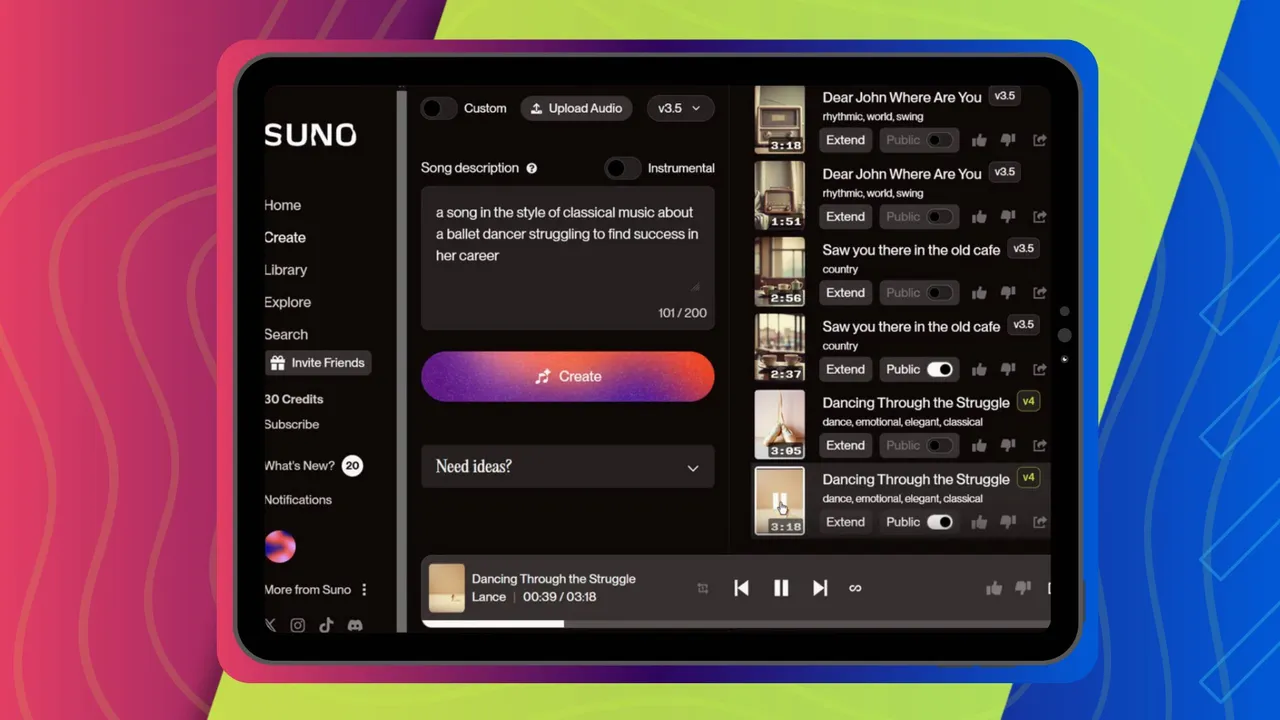
A fresh leak has pulled back the curtain on one of AI music’s biggest black boxes. The powerful AI music generator, Suno, is currently under heavy scrutiny following revelations regarding its training methodologies.
According to internal data obtained by 404 Media, Suno reportedly scraped millions of copyrighted songs and lyrics from services including YouTube Music, Deezer, and Genius to train its generative AI models. One leaked file allegedly shows the company ingesting more than two million YouTube Music clips alone. Additional datasets contained thousands of hours of music, vocal recordings, lyrics, and even podcasts. These revelations offer the clearest look yet at how Suno built its technology after months of declining to publicly detail the contents of its training data.
Legal and Ethical Implications
The timing of this disclosure is significant. Suno is already at the center of high-profile copyright lawsuits from major record labels, which accuse the company of unlawfully using protected recordings to train its AI. While Suno has acknowledged that its models were trained on publicly available music files and metadata, it maintains that doing so falls under fair use. The newly leaked documents, however, appear to support allegations that the company relied heavily on unauthorized scraping from streaming platforms.
Data Security Concerns
Beyond the copyright controversy, the breach also exposed customer information, including email addresses, phone numbers, and limited Stripe-related payment details. Suno stated that the incident occurred in late 2025 and primarily involved outdated source code rather than sensitive financial information. The company further noted that it did not notify users because it determined the incident did not meet legal notification requirements.
Whether this leak ultimately changes the outcome of Suno’s legal battles remains to be seen, but it undeniably raises the stakes in the broader debate over AI and music ownership. As generative music tools become increasingly sophisticated, the industry continues to grapple with a difficult question: where does innovation end and unauthorized use begin?