
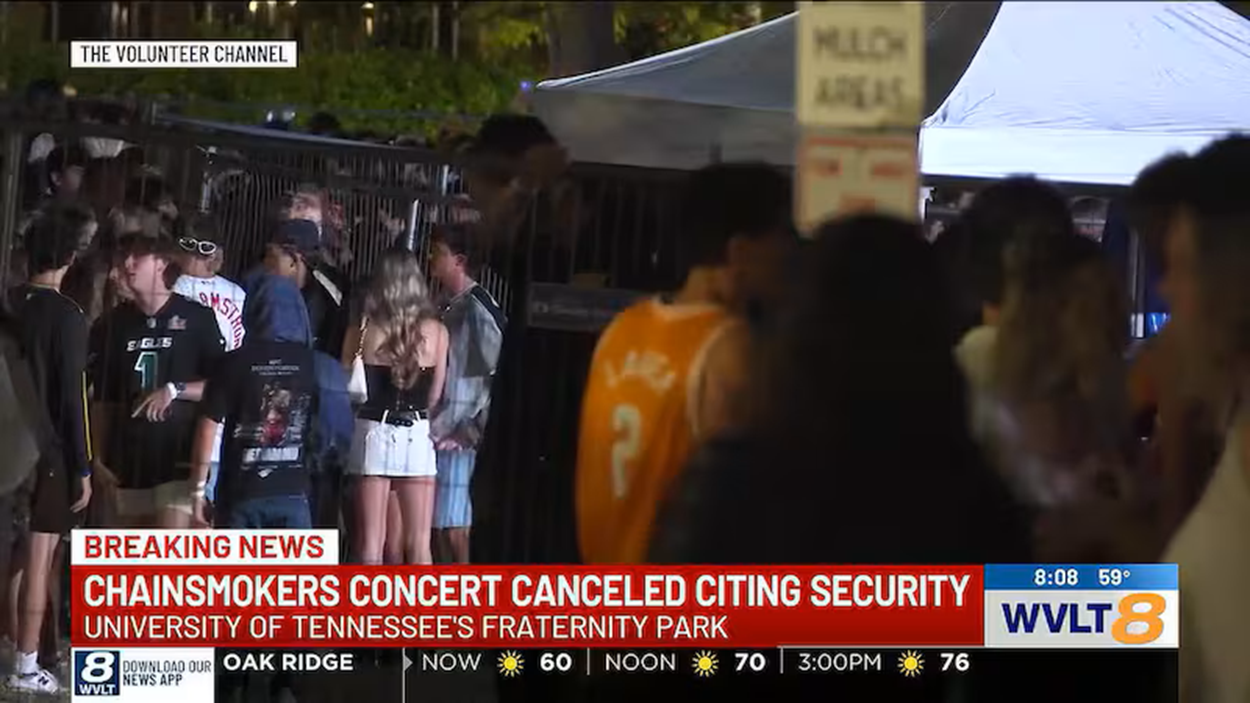
College towns are known for their high-energy celebrations, but a recent event in Knoxville took a dangerous turn. The Chainsmokers were scheduled for a surprise, free indoor performance at Fraternity Park, intended to kick off the fall semester with a bang. However, what was planned as an intimate gathering quickly spiraled into a chaotic situation as an estimated 10,000 students and local fans flooded the venue, far exceeding capacity and overwhelming event infrastructure.
Barricades Buckle Under Pressure
The initial plan for the event relied on a structured entry process, with attendees expected to line up for wristbands. Reality, however, proved far more volatile. Around 9 PM, as gates opened, the massive crowd surged forward in a unified push. The pressure was immense, causing temporary chain-link fencing to buckle and eventually collapse. The resulting stampede saw individuals rushing toward the stage, trampling barriers and bypassing security staff. Reports from the scene indicated that the crush was severe enough to impede breathing, with several security personnel knocked to the ground during the surge.
Resource Constraints and Safety Concerns
Local law enforcement in Knoxville was already operating under significant strain, as many University of Tennessee police officers were deployed to manage a separate concert featuring Ella Langley at the Thompson-Boling Arena. With the perimeter compromised, private security was unable to maintain order. While fraternity members and designated monitors attempted to manage the crowd using megaphones, their efforts were largely drowned out by the noise of the massive gathering. By 10:20 PM, The Chainsmokers addressed the situation via social media, citing safety concerns, and shortly thereafter, emergency vehicles arrived to disperse the crowd.
The Risks of Unplanned Pop-Up Events
This incident highlights the inherent dangers of hosting high-profile, arena-level acts in environments lacking professional-grade infrastructure. Similar issues have been observed at other recent promotional events, where the lack of steel barricades and sufficient security presence turned excitement into a public safety hazard. As universities and event organizers look toward the future, this fiasco serves as a stark reminder that when thousands of fans are involved, makeshift security measures are insufficient to prevent a potential tragedy.