


One of the larger symbols of Trance sat down with us for a friendly chat.
If there’s ever just one word I could use to define Oliver Smith, I’d probably go with “legend“. No other words pop up in my head as vividly as that one. And with good reason: Olli has been a key player in Trance for many, many years. And you may not even know you’d been vibing to his tunes, since he’s done a couple different aliases in the past. Ever heard of Smith & Pledger? Yep, it’s half him. Aspekt? Him. Meramek? Also Oliver.
He’s behind one of the true gemstones of Trance music, the Smith & Pledger mix of Luminary ‘Amsterdam’. And his contributions don’t stop there, as he’s been releasing music on Anjunabeats for almost 25 years, his first-ever signing on the label being ‘Mobetta / Something Else‘ from 2001. In fact, Smith was the first artist to be signed to Anjunabeats, after Above & Beyond themselves — founders of the imprint.
Earlier this year, Oliver put out his debut album Footprints, a sweet collection of moving tracks that embody his sound very well. And while it was an incredible listen, we had a bit of hunger still. So we figured the sweetest dessert to fully enjoy the album, would be to get some words from the man behind the magic. And hence, here it is, our warm and friendly interview, with the living legend that is Oliver Smith.
From his beginnings in music, to his friendship with Above & Beyond, thoughts on Footprints, Anjunabeats, and so much more, we’ve got it all in the paragraphs below. So sit tight and enjoy the ride, as we dive deep in conversation with the one and only, Olli.
The Interview
(Please note, the bolded text represents a question, while the paragraph(s) following it represent Oliver’s answers.)
Well, first off, congratulations on the release of Footprints! I mean, we’re a bit late to the party, but I can assure you we’ve been having a great time vibing to the album ever since. What are your thoughts on it, now that it’s been out for a while? Any particular reactions from the audience that surprised you or filled you with joy, for example?
I’m really pleased with how it’s gone down. It’s been interesting because, before the full release, we were trying to pick which songs would be most popular for the singles. But now that it’s been released, everyone seems to have different favourites. So that’s a nice sign, different people are being made happy by different things, so I’m quite pleased with that.
Any particular favourites of yours from the album? I know this is a tough question, but just out of curiosity.
‘Rely On Me’, that’s a big anthem. I really like ‘Wash Away’ as well. There’s something cool about the atmosphere of that one. The Benjamin Roustaing tracks are all amazing in their own ways. The Diana Miro one, ‘It Is What It Is’, that one went somewhere a little bit different, that’s fun as well.
I love to hear that. Mine’s ‘Legacy’, but also ‘Signals’, the intro track. I don’t think many people give love to the intro tracks of albums and they often are hidden gems.
I’m thinking about doing some kind of ambient versions of the album at some point. And I think there’s something in that track that could go further.
How did the album project come about? Did you feel some sort of apprehension about making your first album? Given the number of years you’ve been in the game, perhaps fear that it wouldn’t equate to your legacy?
Yeah. I’ve started an album about four or five times over the 25 years since I’ve been doing music. And the timing just never worked out, and it happened that I had some three or four songs ready for an album project, and then they just became singles. So yeah, it’s been something I’ve wanted to do for a long time, but just never found the right timing and the right lineup for it. And after the pandemic, I felt like I should.
So that was when I started focusing on actually doing one. And then execution, it was around two or three years leading up to the actual album release, the time I was seriously working on it.
Any particular tracks that you remember while producing them that came together very naturally? Or on the contrary, any songs that were very difficult to finish?
Ones that came together naturally: ‘Love Is A Feeling’, I had a very clear idea where to go with that straight away. ‘Rely On Me’, we basically came up with that one in an afternoon. It was Taylor and I, we were in a studio in London, and I turned up with some very basic ideas. And he came in and straight away came up with an amazing vocal to go over one of the basic backing tracks. And at the end of that day, we pretty much had the whole thing ready to go, which was quite nice. That’s how it should be.
But then there’s other ones that took 100 versions before they were the final project. A lot of the times, the song comes very quickly, the actual music. But it’s the production, you know, making it into the right atmosphere and the right vibe and stuff, that’s the bit that can take a really long time.
What’s your go-to process when sitting down to make something new? Do you come inspired to the studio? Do you find inspiration while messing around with plugins or sounds or stuff? Do you make melodies first, beats first? What’s your overall approach to it?
Mostly I start with some chords or a melody. I like to get the musical part of the track right before I go mad with making drums and sound design and everything. Occasionally, it will start with just some kind of weird sample, or sound effect. But yeah, mostly I’ll start from the music and the song side of it. Because without that, everything else is not going to go anywhere.
Any particular musical muse of yours? What, or who, or a place or something? Or a food? [laughs]
My old influences from when I was growing up are people like Orbital, Underworld, Leftfield. Even people like Aphex Twin. A lot of guys with melodic elements. And I think that carries through to what I do now. But also I like a lot of housey stuff. And a lot of soundtracky stuff like Ólafur Arnalds or Nils Frahm, those guys.
Beyond that, I suppose travel. I’m lucky that I get to see lots of different places, and I’m sure that feeds into what I do quite a lot. Sometimes, just the actual sitting on an aeroplane for a long time gives you time to think and work on music.
I remember I spoke with Qrion back in April and she told me that just simple things like the Uber ride back to the hotel on a quiet night street, anything could be inspirational for her.
Yeah, and movies or TV shows can also be inspiring, not necessarily in the obvious way that I hear something, but more like a vibe or an atmosphere.
Absolutely. Now, strictly talking about production and studio, how do you come up with these unique synths that you use in your productions? Throughout time, I’m talking like the iconic ‘Pacific’ lead, the one you used in ‘Mobetta’ back however many years ago, nostalgic sounds that you use today, like the warm, sawy thingies from ‘Here Before’. How do you go about creating these sounds that just feel like warm, inviting, friendly? I’m not sure how to word it.
I guess a lot of them I make from scratch. So it’s basically whatever my ear likes at that moment. I guess it’s my sonic personality in a way. I’m not saying that I don’t use presets as well, sometimes I do, but I think it’s how you use them. There’s a lot of different ways of using a sound. So I suppose I can’t help bringing my personality to whatever sound I’m using. And a lot of the time, it’s about where you put it, what’s playing alongside it or where it is in the space. Also simplicity, that’s a big thing in my production. I try and be minimal, as much as you can be within a trance record or progressive house record.
I was trying to go down to that exact point because I feel like your productions are… They have rounded sounds, I cannot really describe with better words than what I’m trying to spit out right now. But you carve the space for these exact sounds. It wouldn’t just work in any big roomy, super flashy, all lasers and stuff track. It’s like you purposely make the space for this particular synth. And it’s one singular, cohesive synth.
Yeah, that is something I try to go for. I try and make every layer count in a song because it’s really easy to overfill all the spaces. You know, have 10 different things all playing at the same time, when in reality, it’s about getting the emotion across in the most efficient and tidiest way. It’s about getting emotion across more than anything else. That’s basically what I’m aiming for. It’s definitely something I think about a lot. Is that sound necessary? Can it be simpler? That’s often a big part of the process.
Now, onto another track of yours, much more recent arguably, ‘Here Before’ with Above & Beyond. A long overdue collaboration in my eyes, I’m so happy that’s finally happened. Now, how did it happen? Did you guys just chat one day and agreed, “Hey, we should make something together”?
We actually started that one a few years ago. I was just hanging out with Jono [Grant], because we’re old friends. And one day we just had an afternoon in the studio together. And we were jamming out some ideas and came up with that. And then it sat on the shelf for a while. I’d forgotten about it, to be honest. And then Jono sent me a text one day and said, “I got Sam to do a vocal for it”. Sam is Opposite the Other by the way. So I was like, “Oh, that’s cool”, because obviously I was aware of Sam’s other track that he did with A&B, ‘See The End’.
Then it was another year or two, and the guys were working on this album. And I think it was Dave Dresden who found the demo, because he was working as A&R for the album process for them. To help them get their ideas in the right place, lend them an extra pair of ears. And he pulled that demo out and said, “You’ve got to do something with this”. I was pretty pleased to hear that. And yeah, then we had a few more sessions where we polished it up a bit more, and luckily, the guys were happy to put it on the album!
It does fit on the album, yeah. I don’t know who to congratulate on that, the boys, Dave, you, I don’t know, but it just fits the vibe of the album.
Yeah. It was designed to be an Above & Beyond and Oliver Smith track. So it makes sense.
But it’s also not a super over-the-top track. That’s why it works on the album. Because it’s a bit more intimate, if I can phrase it that way.
We had a lot of debates about how big to make the track and how clubby to make it. And there’s kind of two halves to the track. The first half has a different vibe. It’s a bit more radio-friendly. And then the second half is more clubby. And we did go through a few versions where it was just the clubby vibe, and a few versions where it was just the radio-friendly vibe. But I’m glad we settled on the combination of the two, because it suits both worlds that way quite nicely.
I was about to ask you, but you’ve already answered this. How did Dave like the track? Did he have any comments or something? But apparently, he just liked it from the get-go.
Yeah, I think the demo that he heard was the first half of the track, with that bassline drop. And he was very enthusiastic about that when he first heard it. He actually dropped me a WhatsApp message and said, “I found this, you guys have to do something with it”. And that was his job in their album process. He was a kind of cheerleader. When the guys were getting tired or had run out of steam with an idea, he would come along and encourage them to finish it. And yeah, I was lucky to be included in that. So it was quite nice to get an insight into that vibe that they were getting there.

And of course, when I was doing my album, I was borrowing one of the studios at the Above & Beyond studio complex and offices. So I was hanging out with the guys while they were doing their tracks. And I was there while they were recording some of the vocals. And I felt like I was part of the process a little bit as well. As they were with my one, they were sticking their heads in and seeing how I was getting on and saying, “Maybe try a bit more of this and a bit less of that”. It was nice. I felt like we were doing the albums together, almost.
It’s also that you had really close publish dates, which is crazy.
I think the plan was to space them out a bit more, but it just worked out that way, I got pushed back a little bit. So basically my album campaign finished and they announced theirs right away.
I mean, it all comes together for the 25th anniversary of Anjuna.
Yeah, I think there’s a nice symmetry to that, you know, that I was there right at the beginning. And I’m right there for their long-awaited album after, what is it, five years or something? So it’s nice.
Which is also another thing that I was about to mention, that not only is the track fitting in like sound-wise, it is also fitting to the concept of their album that you are part of it as well, because they have a lot of nods to the past. I hear cues of Tri-State, Group Therapy and the fact that you’re a part of the collaborators in the album. It’s just another nod to the family.
I can’t really believe it’s taken us this long to do a song together. It’s crazy. But I think it was worth the wait and it worked out nicely. And the reaction we’ve got from it has been really good. So I’m pleased that people are enjoying it how we intended it. I played it for the first time at the New York 25 Years show that we did a few months back, and it was really cool to join up that whole journey of 25 years. And then, you know, my first collab with Above & Beyond on their album and to be able to debut there. There’s a lot of nice things all lining up at once.
Crazy, crazy coincidences in a way. Now, this is the first track that you’ve publicly put out. Had you ever started anything before this?
With Above & Beyond? Yeah, we have. We have tried a few things here and there before. There’s a few others somewhere. But this is definitely the one that got developed the most. The other ones we did were just very basic ideas. Maybe we’ll revisit something or start a new one. I’d like to.
And you’ve got a good result, so it’s also good that you’re interested.
And it was pretty easy to work with the guys. Obviously, they’re old friends. So there was no friction. You didn’t have to be careful about what you said. We’re all talking about the same music. We all know the same stuff and how the label is and all of that. So, yeah.
Now, speaking of the label. Well, as poetic as it is to say that Anjuna has been a great part of your career, the opposite is also very true. You’re one of the legends in the history of Anjuna, being, I believe, the longest standing after, well, the founders Above & Beyond themselves. How did it all begin for you in music? How did you come to the label?
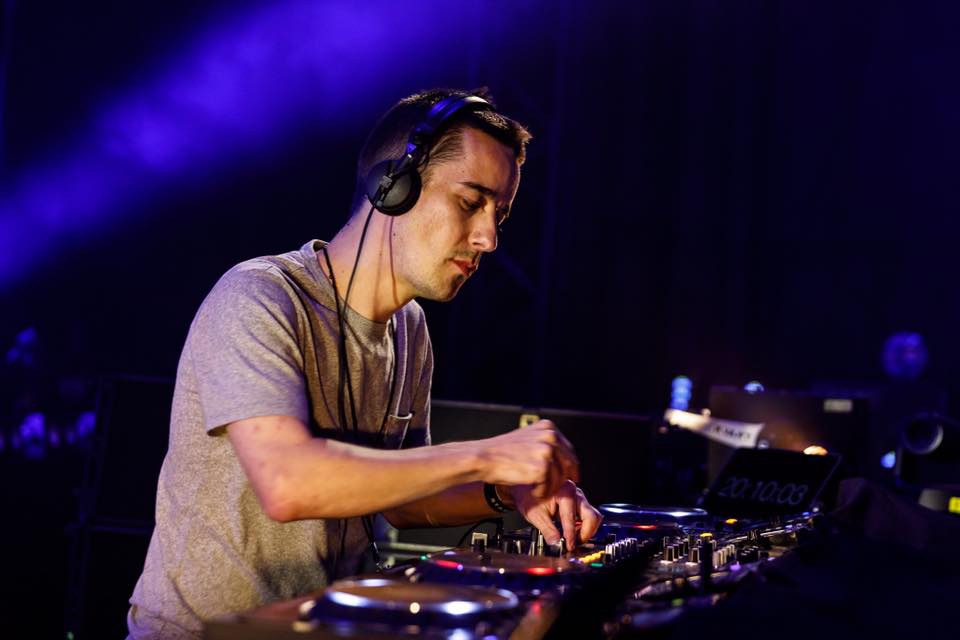
Going back to the very beginning, when I was 12, 13, I was seeing a lot of the same thing that the A&B guys were seeing on TV, and on the radio. And there was a lot of great dance music around about that sort of time. It was a time when dance music was coming across from the underground to the commercial stages as well. So I think we, in a lot of ways, had a similar upbringing with music. But fast forward eight, ten years, and we were all at university together. And I actually met the guys at a house party that some friends were having. And just literally happened to be in the same room as them, it was Jono and Paavo, I remember. They were just standing there talking about some studio equipment or synthesisers or something. And I walked up to them and said, “Oh, I’ve got this synthesiser”, “I like that one”. And we immediately hit it off and kind of knew we were on the same wavelength.
It was as natural as that. At the same time, those guys were just starting up their label. I think they were literally just pressing up their first vinyls around about that time. So, yeah, we were all hanging out and just going through the university experience together and stuff as well. And it was very natural for me to just do some music for them as their label was developing.
But they were on fast forward, because before they’d even left the university, they were working with Tony and working on Madonna remixes and, you know, just going at it. And it was obvious they were destined for the big time straight away. It was cool. I went with them on some of their first gigs and saw them developing. It was really cool to be alongside them on that.
Had you made any music before moving to the Anjuna stage of your career, I would call it?
Yeah, I’ve been making music since I was a teenager. At first I was making stuff on my home computer and every Christmas, every birthday, I was begging my parents to buy me a new bit of music equipment, and any part-time jobs I had, I was putting all the money into my studio. So, yeah, I was already releasing music by the time I’d met them. When I was 19 or 20, I put my first records out, and I started with some drum and bass and chillout music with LTJ Bukem, who did the Logical Progression albums, which were a massive influence on me back in the day. So it was nice to jump straight into that label as well. And, yeah, many years later, he did some remixes for Above & Beyond and for Anjunabeats as well. So it’s a small world, isn’t it?
Absolutely. Now, what would you say you’ve done right to stick with the label for all this time when other former icons have parted ways at the end of the day?
I just always felt like it was the right place for me. I’ve considered going to other places, and I’m sure there’s some other labels that would love to put some of my stuff out. But I feel like Anjuna is the place that gets me the most. And also I align with their values and their vibe a lot. So it just never felt right to go somewhere else, really. I’m lucky that I get to play their shows and I know where I stand with everyone there. It just feels like the right place for me. So why go anywhere else? I don’t know.
Do you remember a time in your career when you first had that feeling, while producing or playing, that you had something really magical in your hands? Or like, “This melody can become something huge”?
I mean, that’s basically the thing that you’re chasing every time you try and make a record. And that’s one of the main things that keeps me coming back to do this, getting that feeling when you’ve got something that’s bigger than the parts that you put into it. It’s almost like an illusion that comes out of the speakers.
I was chasing that ever since the beginning. I think probably some of the tracks I was making when I was 15 or something had that feeling for me at the time. They probably sound terrible now. [laughs] But that’s basically, if I don’t get that feeling, it’s not a record. And I’m not interested in putting something out that I don’t think is special or has that feeling of being something that’s bigger than its parts.
I know this may be a tough question, but if you had to pick one or two tracks of your entire discography as your favourites, maybe because of how they sound, because of how much they meant to you back then, which one or which ones would it be?
Oh, that’s tough. I think a few landmark ones, let’s say ‘Endorphin’, just because it’s such a massive club banger and it still sounds great. I play it out every now and again and it still works. I think it’s really hard to do something like that, that doesn’t age really badly. And for me, that one still has a timeless quality to it somehow, which is another thing that I’m always trying to chase with my records. I want them to still sound great in 25 years as much as possible. So that one’s amazing. And we did a Dolby Atmos Surround Sound version of that, which they were using to demo the Atmos sound systems in Dolby stores at the time as well. So that track really went places. Some other ones, obviously ‘Lovingly’ is a big one that won’t go away somehow. For me, the Meramek remix of that is the one, because that’s actually the original mix. It kind of worked out backwards that one, the remix was the original. What else? More recently, ‘Everything’, I think, is just an exercise in simplicity with just a really strong vocal and melody.
I’m lucky that I’m not struggling to find old tracks that still work in DJ sets. And, you know, I can even go back as far as the first one, Mobetta. It’s not like a club track, I wouldn’t say, but certainly if I’m doing an open-to-close set somewhere, I could play that early on and it still sounds great. It still has a vibe. That’s one of the things: I don’t chase trends, and I don’t try and make things that are gimmicks. That timelessness, that evergreen quality is what I’m after.
By no means a one-hit wonder, ladies and gentlemen! [laughs] You mentioned Meramek. Something interesting happened with Meramek recently, the Anjunadeep Explorations set. It was advertised everywhere as a rare Meramek set, because it is true that you don’t often play under that alias. Why are you motivated to keep going with it and just not quit at some point? What do you find in your side project that you cannot find within Oliver Smith?
I feel like that’s unfinished business for me. It’s something that I started as something of a passion project, just because I wanted to do a different sound. And I felt like it could fit on Anjunadeep. It was something I was having fun making. So it wasn’t necessarily a big commercial idea originally. But it did actually gain a fair bit of traction. I did some remixes for Kaskade and did quite a few shows and stuff. So it did alright. But I reached a point where it was difficult to do two projects at the same time. I decided to concentrate on Oliver Smith again. But yeah, I wanted to come back to it because I still feel like I can do a lot with that sound. And I feel like it was ahead of its time.
The last show that I did as Meramek alone was six or seven years ago. And in that time, there’s been a lot of development in what Anjunadeep are doing. And I feel like they’ve almost caught up with where I was in some ways. Not exactly the same, but there’s a lot of influences with that kind of garagey sound, and people like Fred Again coming through now, and what Dusky are doing, and Because of Art. There’s a few other acts on Anjunadeep that are pulling in those influences as well. So it seems like a good time to bring it back. And the Anjunadeep Explorations guys suggested that I do that set. And I thought, yeah, why not? Let’s do it.
Ahead of doing that show I decided I’d try and make a remix of one of my album tracks. So I did ‘Be The One’. We’re going to try and release it as well. So Meramek is back because of that now, in a way. And it’s inspired me to do a little bit more studio work. Watch this space, there’s some more on the way.
I agree that Anjunadeep has opened up its spectrum a ton. Not in a bad way, by any means, but I see they’re even pushing trance with the latest HANA EP and stuff. So it’s just fitting for you to get back on your Meramek feet, you know? Deep housey, but deep trance stuff. It’s not really something that you can describe in one genre, can you?
I think it’s very much a hybrid kind of sound. And that’s the whole point of it, really. Just trying to do something a little bit different and have fun with a slightly slower tempo. And a bit more groovy, funky sort of vibe.
Now that we’re talking about it, have you got any go-to classic that you love to play at your sets? Be it yours, or someone else’s.
I don’t really like playing just an old track, you know? Everyone will play ‘Sandstorm’ or something, but I think it’s too easy. It’s too obvious for me. So, I’ll often try and pick something that I consider a classic, but is a slightly smaller record. Often, I’ll look through some old sets of mine from 10 years ago or something and pick out some records that people have forgotten, or I’ll try and find a remix of something that people love. One that I dug out recently, again, is the Tinlicker remix of ‘Children’. It’s nice to have a sort of classier, slightly more modern version of it, but that still ticks that “classic” box for everyone. That’s how I approach classics. But I always try and limit it as well, because, as I say, it’s a bit too easy. I’m not interested in taking the obvious path and just playing the easy hits that are going to get reception. I’d rather try and stretch myself as a DJ and find something a bit rarer, or a bit more interesting, or something that’s more of a surprise.
Which is a good mindset. My best friend, he loves to go to Guy J’s sets, because almost three-quarters of the music is unreleased. So it’s like a game of, can you guess which track this is? Or, have you heard this before?
Yeah, I’m not super upfront with things, but a lot of people who come to my sets for the first time, they’re surprised by the variety I have in there. They think I’m just going to play Oliver Smith tracks or only trance bangers or whatever, but I always have a journey prepared, a range of different vibes. And I like to surprise people with, say, dropping a Spencer Brown track or a random remix that I found that week, that kind of thing. Because I enjoy DJing as an art.
Yeah, that’s the thing. It’s not like a side thing that can support you as an artist. It’s rather an added craft altogether.
Yeah. And also, I’m aware that a lot of people come to multiple shows, so I don’t want to play the same set every time either. Also for myself, I like to have the variety and the interest.
Well, you mentioned Spencer. That’s interesting, because now that we’re face-to-face, I’ve got to tell you: when On The Moon came out, that was the first EP that I recall I couldn’t pick a favourite. Back in those years I always wanted to pick my favourite track from any release, and it blew me away how I just could not pick out of the two. They’re both fantastic tracks.
Spencer’s a genius. He’s kind of a moving target, you never quite know what you’re going to get from him. And with that one, he really combined the melodic quality of the track with his amazing groove. He’s amazing at doing arrangements as well. The way he paces a track and the tension and release in all of his tracks are really good. I’d love to get another remix from him one day. He’s probably too expensive for me now! [laughs]
Now, a bit of a hypothetical question. If you could go back in time, any number of years that you find interesting, and meet your past self, what would you tell that younger Ollie? Were you worrying about something that wasn’t really necessary, for example?
I’d probably go back about 20 years, when I almost gave up music, because it was really hard to transition from being a student to a full-time musician and to pay the bills. There’s a long process of building a brand, establishing a name, and securing regular gigs, which can lead to a reliable income. And obviously, the more records you have out, the more royalties you make and things like that. So at that time, I was making the decision, do I try something else, or do I carry on with the music? And I was always going to carry on with the music. But I think it would have been nice if I told myself “It’s going to work out. It’s going to be good.” And “Hurry up and make an album”. [laughs]
This was about the time when CD and physical stuff was in decline, right?
Yeah. It was a time of change for the music business. Vinyl and CD were dying off, add to that a lot of piracy on the internet. I think the gig scene around that time was a little bit complicated as well… a lot of things happening at once.
I see. And lastly, suppose there’s someone in our audience who truly looks up to you, your journey, your legacy. What would be one piece of advice you would give them if they wanted to be like you one day and follow your footsteps?
The artist career, living off of music, you have to really want it for the right reasons. It’s not an easy path, so you have to be passionate about it and you have to believe in your skill, your ability to deliver something that is special, something that’s different. And yes, I make my living from it, but I’m not just motivated by money to do it. So I think you have to have that approach if you’re going to be in it for the long haul, because there’s a lot of ups and downs.
And also, your focus has to be on how to make music that will have staying power. If you’re chasing the trends all the time or if you’re just doing the latest cool thing, then you’re going to be out of date quite quick. You’re going to burn out and you’re also not going to be satisfied with yourself. You’re not going to have your own internal motivation for it.
So, that’s: be true to yourself, and do it for the right reason.

The unique sound thing is so important. I’ve heard it from many, many people that I’ve interviewed. And it’s so true. The fact that when you go on Beatport, if you go down a few spots, everything begins to sound the same, you can’t make out which artist is making which track.
Well, especially now, there’s a lot of cheap ways to make a record. You can download a template, or you can use lots of samples, like a construction kit, almost. And there’s a lot of people who are just trying to copy what is successful at the moment. You might get one or two successes with that. But if you’re trying to build a long-term career and you’re trying to make something actually special that you can be proud of, that’s not the way to go. I think enjoying the process is the way that you make the best records.
Final Words
Wisdom pours from this interview! Back when I was in highschool listening to Oliver’s tunes I would’ve never imagined we’d be talking as warmly and friendlily as we did. Life gives us opportunities, and I’m so glad I’m taking mine and using them to benefit all of you guys reading as well. Olli, you’re a true genius.
Thank you so much for this extensive piece, thank you so much for Footprints, and for a quarter of a century of straight-up bangers. You can stream Oliver’s debut album in full by checking the Spotify embed down below. And stay tuned to our page for the latest in Dance music around the world.